However popular and highly-praised by media, organizations, and non-autistic adults, very little information is disseminated about the history of ABA or the perspective of the children (some of whom are adults now) who have undergone ABA treatment.
What follows is a short history of ABA: the behaviorist scientists who were instrumental in forming what is now common practice.
In the field of psychology, ABA developed from an earlier practice called behavior modification, and is the application of classical conditioning and operant conditioning.
Behaviorism is an approach to psychology that combines elements of philosophy, methodology, and theory. It emerged in the early 20th century as a reaction to "mentalistic" psychology, which often had difficulty making predictions that could be tested using rigorous experimental methods. The primary tenet of behaviorism is that psychology should concern itself with the observable behavior of people and animals, not with unobservable events that take place in their minds. The behaviorist school of thought maintains that behaviors as such can be described scientifically without recourse either to internal physiological events or to hypothetical constructs such as thoughts and beliefs.
Behavior modification was based on behaviorism, and was used briefly during the 1950s but predominantly from he late 1970s to early 1980s. Behavior modification used consequences, including positive and negative reinforcement contingencies to increase desirable behavior, or by administering extinction and or punishment to reduce unwanted behaviors.
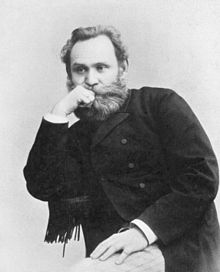 |
| Ivan Pavlov |
Classical conditioning is also called Pavlovian conditioning.
Operant conditioning is a type of learning in which (a) the strength of a behavior is modified by the behavior's consequences, such as reward or punishment, and (b) the behavior is controlled by antecedents called "discriminative stimuli" which come to emit those responses.

ABA is a form of behavior analysis based on the findings from the experimental analysis of behavior pioneered by B.F. Skinner in the 1930s. Applied Behavior Analysis is the process of applying antecedents and consequences - as used in Operant Conditioning - to understand and reinforce socially appropriate behavior.
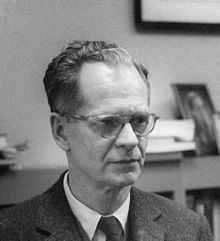 |
| B.F. Skinner |
Skinner invented the operant conditioning chamber, also known as the Skinner Box:

Slot machines and online games are sometimes cited as examples of human devices that use sophisticated operant schedules of reinforcement to reward repetitive actions.
 |
| Charles Ferster |
ABA is the application of classical conditioning and operant conditioning to modify human behaviors as part of a learning or treatment process. Behavior analysts focus on the observable relationship of behavior to the environment, including antecedents and consequences. By functionally assessing the relationship between a targeted behavior and the environment, the methods of ABA can be used to change that behavior. The technique is carried out early in the development of children with autism and developmental delays. It involves discrete-trial training, breaking skills down into their most basic components, rewarding positive performance with race and reinforcers, and then generalizing skills in a naturalistic setting.
Reinforcement and punishment. These terms, as used by behaviorists, were names for specific clinical and analytical tools, which had been derived from experiments on rats, mice, and pigeons. Reinforcements worked like a reward. If they were delivered immediately following a desired behavior, they clearly encouraged the repetition of that behavior. A food pellet delivered to a pigeon stepping on a lever, for example, reinforced that behavior. It encouraged more steps on the lever by that bird in the future.
Applied Behavior Analysis: The Lovaas Method
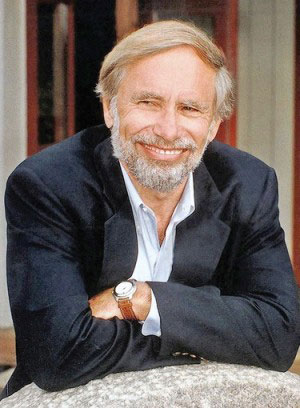 |
| O. Ivar Lovaas |
An article in LIFE magazine in 1965, featuring the work of Lovaas, showed photos of several young boys and girls, none older than nine, undergoing what looked like an onslaught of abuse. The article was entitled, "Screams, Slaps, and Love".
In a 1974 interview with Psychology Today, Lovaas had this to say about the children he was working with: "They are little monsters. They have a hair, a nose and a mouth - but they are not people in the psychological sense."
By the 1990s, after a public outcry, Lovaas and most of his followers abandoned aversives. Subsequent studies could not replicate Lovaas' results from his 1987 experiment. Also, it has been noted by researchers that ABA methods are less effective without the use of aversives.
Modern-day behaviorism
Today ABA is a thriving field. The Association for Behavior Analysis: International (ABAI) currently has 32 state and regional chapters within the U.S. Approximately 30 additional chapters have also developed throughout Europe, Asia, South America, and the South Pacific.
Applied Behavior Analysis (ABA) has been well established in the area of developmental disabilities since the 1960s. Treatment of individuals diagnosed with autism spectrum disorders has grown especially rapidly since the mid-1990s. This demand for services encouraged the formation of a professional credentialing program administered by the Behavior Analyst Certification Board, Inc. (BACB) and accredited by the National Commission for Certifying Agencies. There are over 300 BACB approved course sequences offered by about 200 colleges and universities world wide, and approximately 11,000 BACB certificates, most working in the U.S.
What do autistic people, children and adults, have to say about ABA?
This is the part of the equation that has been largely ignored: the experiences, research and viewpoints of those who are most affected by ABA. Amythest Schaber, who answers questions about autism on youtube, says, "Autistic people should be leading the discussions about autism."
Amythest Schaber: Ask An Autistic: What is ABA?
How to Be An Ally
Ido Kedar: A Challenge to ABA Professionals
Michelle Dawson: The Misbehavior of Behaviorists
Sources:
American Academy of Pediatrics, Pediatric History Center: Screams, Slaps and Love: The Strange Birth of Applied Behavior Analysis, 2013
Dawson, Michelle: "The Misbehavior of Behaviorists: Ethical Challenges to the ABA Industry", 2004
Donovan, John, and Caren Zucker: In A Different Key: The Story of Autism, 2017
Fleischmann, Arthur and Carly: Carly's Voice: Breaking Through Autism, 2012
Kedar, Ido: Ido in Autismland, 2012
LIFE Magazine: Screams, Slaps and Love, 1965
Nelson, Jane, Ed.D: Positive Discipline for Children with Special Needs, 2011
New York Times Magazine: "The Kids Who Beat Autism", 2014
Schaber, Amythest: Ask An Autistic youtube videos 2014-2016
www.wikipedia.org

No comments:
Post a Comment
Note: Only a member of this blog may post a comment.